

Method for Installation of HVAC System (Part-2)
METHOD FOR INSTALLATION OF HVAC SYSTEM (PART-2)
INDOOR UNIT INSTALLATION:
(A) HIGH WALL UNIT:
- The installation of the split air conditioners is a crucial job. If the installation is done accurately air conditioner will give optimum cooling, but if it is not done properly we won’t get the desired cooling effect. A poor installations also leads to frequent maintenance problems. * Several factors have to consider during the installation of split air conditioner. * Strength of wall to hold the AC * The indoor unit of split AC must be installed on a wall strong enough to hold the unit’s weight. * Proper spacing between wall and AC unit * The indoor unit of split AC requires at least 15 cm of open space surrounding its top and sides for proper air flow. * Appropriate installation height from ground * Mount the indoor unit of split AC at a height of 7 to 8 feet above the ground for adequate cooling inside the room * Correct tilt angle of indoor unit * While fixing the aluminum bracket on wall make sure that the bracket is given a slight tilt angle, so that the indoor unit of split AC, when fitted is also at a slight angle to enable unrestricted flow of the condensed water from the drain pipe.
(B) CASSATE TYPE:
-
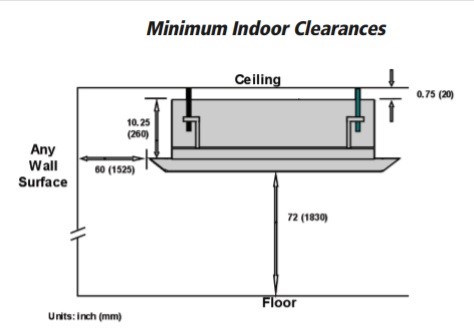
Air inlet and outlet should be clear of obstructions, ensuring proper airflow throughout the room. * Condensate can be easily and safely drained. * A structure strong enough to withstand four 4 times the full weight and vibration of the unit. * Filter can be easily accessed for cleaning. * Leave enough free space to allow access for routine maintenance. * Do not install in a laundry room or by a swimming pool due to chemical sorrowing cassette coil.
-
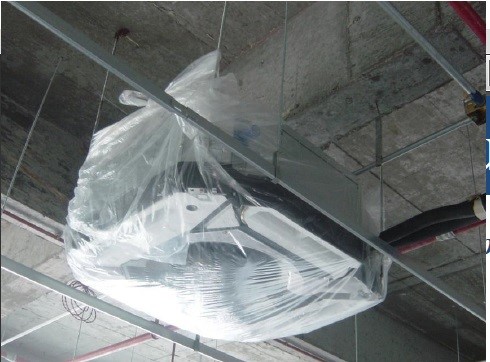
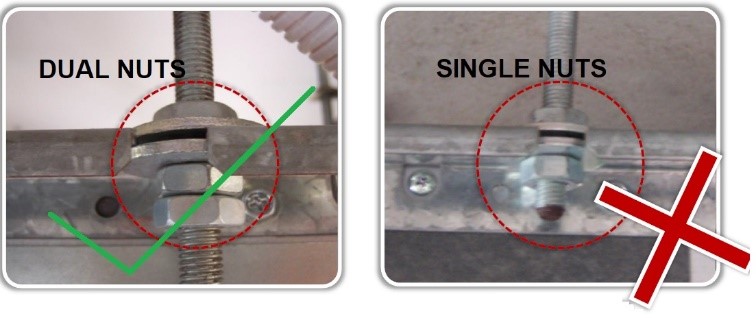
Indoor Unit Hanger Mounting Depending on the type of ceiling, attach the threaded hanger bolts securely to the support stud. Before lifting the indoor unit to the installation location, insert the upper nuts, flat washers (with insulation), flat washers (without insulation), lower nuts and double locking nuts on the threaded hanger bolts. * Lift the Ceiling Cassette main body to the threaded hanger bolts. Insert the unit mounting brackets between washers and then fasten it securely. * Pack the indoor unit with plastic bag after hoisting to protect them from dust entering.
LOUVERS:.
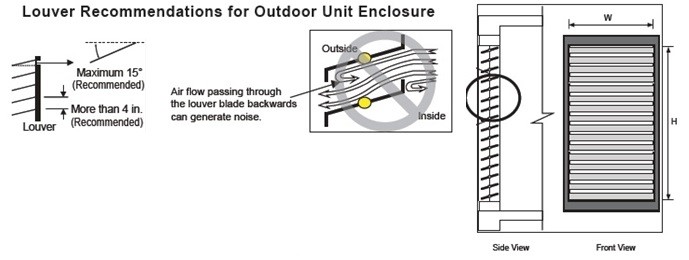
- Allow for ventilation intake and exhaust air based on maximum outdoor unit fan capacity. * Select the size, type and orientation of architectural louvers with adequate “net free area” face velocity to ensure the total external static pressure from the outdoor unit fan does not exceed design limitations. * No obstructions must be placed in front of the louver that could hamper the free flow (throw) of air. * Roof top openings and / or discharge and supply louvers must be equipped with screens to prevent bird and insect infiltration. * Louver Angle is not more than 15 Deg Horizontally * Space between Louvers is not more than 4 inch * If louver open rate is too small it will create noise from louver blade vibrations. Insufficient air flow exchange creates drop in outdoor unit performance and may create air conditioner stop operating.
REFRIGERANT & DRAIN PIPE INSTALLATION WORK:
(A) PIPE SUPPORT:
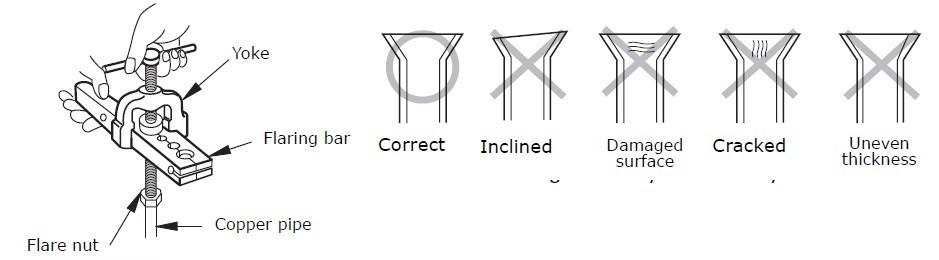
- A properly installed pipe system will have sufficient supports to avoid pipes from sagging during the life of the system. * Sagging pipes become oil traps that lead to equipment malfunction. * Pipe supports must never touch the pipe wall; supports shall be installed outside (around) the primary pipe insulation jacket. Insulate the pipe first because pipe supports shall be installed outside (around) the primary pipe insulation jacket. * Field provided pipe supports must be designed to meet local codes. If allowed by code, use fiber straps or split-ring hangers suspended from the ceiling on all-thread rods (fiber straps or split ring hangers can be used as long as they do not compress the pipe insulation). Place a second layer of insulation over the pipe insulation jacket to prevent chafing and compression of the primary insulation in the confines of the support clamp. * As necessary, place supports closer for segments where potential sagging could occur. Maximum spacing of pipe supports shall meet local codes. If local codes do not specify pipe support spacing, pipe shall be supported: * Wherever the pipe changes direction, place a hanger within twelve 12 inches on one side and within twelve 12 to 19 inches of the bend on the other side. Support piping at indoor units, Y-branch, and Header fittings * Supports must be strong enough. The supports should be full thread booms, and their diameters should be ≥ 10mm. * Dual nuts should be adopted t…